
Overview
Maintenance of the Sandia trail system is accomplished by a synergistic system consisting of a dedicated FOSM crew complemented by an email network of volunteers and Forest Service personnel all supported by a comprehensive database tracking reported problems and their solutions.
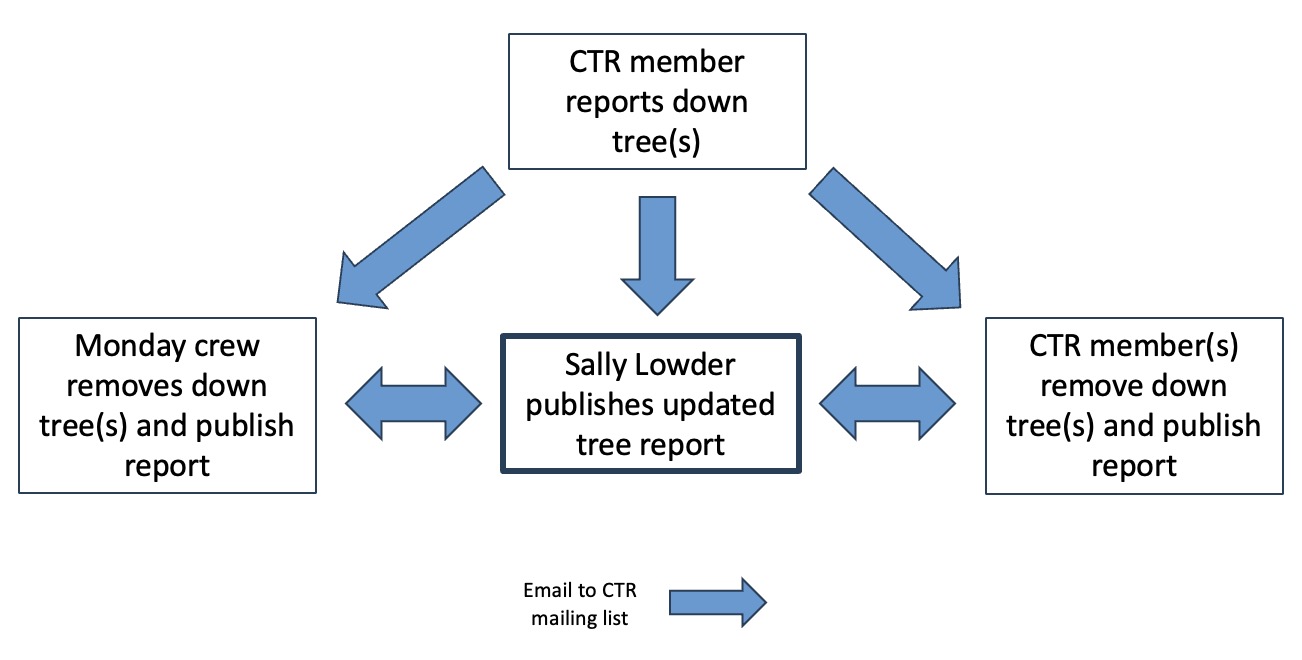
Cibola Trail Rangers (CTR)
A vital element of this process is the Cibola Trail Rangers (CTR) email system used to report obstructing or hazardous trees by volunteers and Forest Service personnel hiking or riding mountain bikes or horses on the trails. Members sometimes clear trees themselves then report what they’ve done using the CTR system. It’s quite frustrating to hike several miles only to find a reported obstruction already cleared.
Click here to learn more about or become a member of Cibola Trail Rangers.
Trail maintenance crew
This FOSM crew, which usually works on Mondays, clears official trails of fallen trees and other obstructions thoughout the Sandia (and occasionally Manzanita) Mountains. Clearing large-diameter trees, complicated entangements of trees (“train wrecks”), and broken branches or trunks hanging perilously overhead (“widow makers”) is a forte of this crew. When you see fresh sawdust, sawn ends of a tree trunk on either side of a trail, or sections of a trunk or limbs lying alongside the trail, this crew probably was responsible.
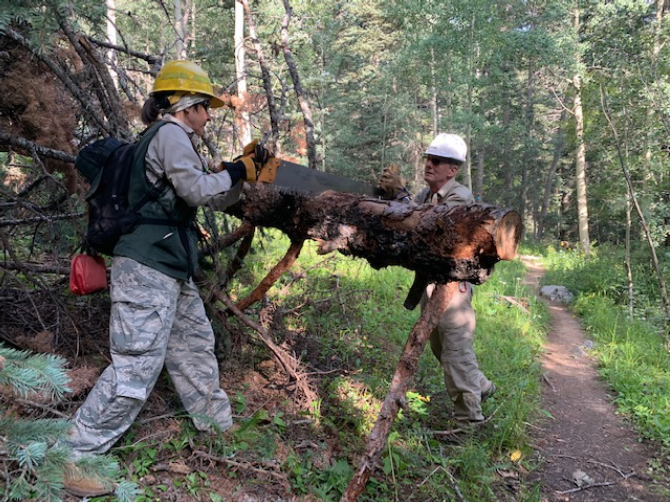
Photo credit: Bob Lowder

Photo credit: Cliff Giles
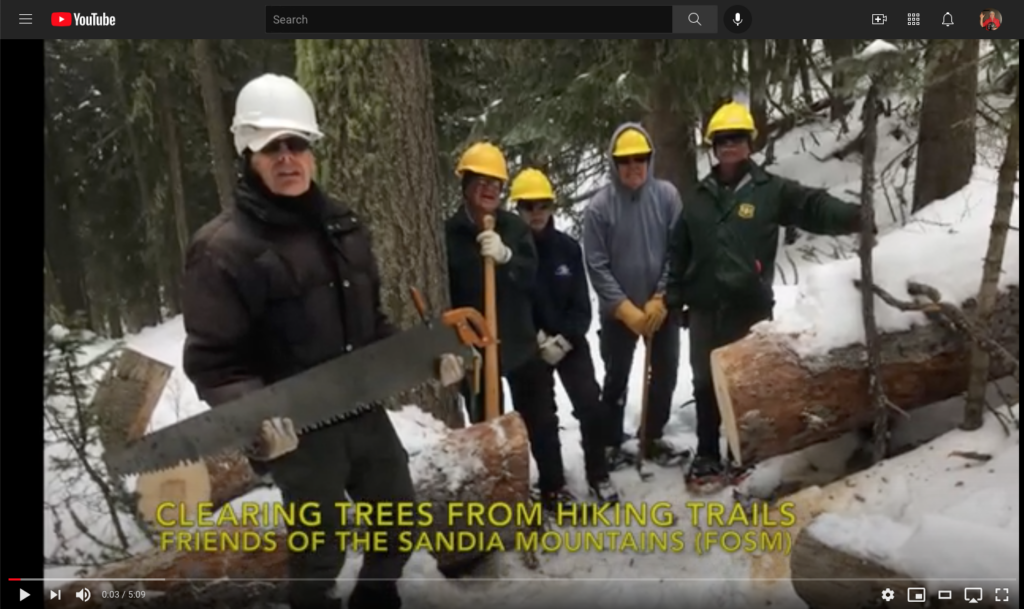
Bob Lowder leads this crew, and Byron Garner fills in capably as crew leader while Bob and Sally are on their yearly hunting and fishing trips.
The crew sometimes uses chainsaws outside the Sandia Mountain Wilderness but mostly uses handheld crosscut saws as well as other hand tools for their work.
These activities are not for the faint of heart. In addition to the physical effort involved in removing the obstacles, hikes of several miles with 2,000 feet or more elevation gain are common.
Safety is paramount. Everyone must wear appropriate personal protection equipment (PPE), which includes gloves, long sleeves, long pants, sturdy boots, helmets, eye protection, plus chaps and hearing protection when chainsaws are used. Sawyers (yes, that’s how it’s spelled) are trained and certified by the Forest Service although newbies can use crosscut saws under the supervision of a certified sawyer. That still leaves plenty of work for new members to do using other tools such as Pulaskis, cant hooks, and pruning saws.
Bob or another crew member publishes a detailed report after each activity. These reports along with their many pictures provide a great means of learning about the invaluable work of this crew.
Click here to find dozens of reports, hundreds of photos, and yearly slideshows of trail maintenance crew activities since 2018.
Trail Tree Report
An essential element in making this system work smoothly is a comprehensive database that tracks reported obstructions or hazards and their solutions whether done by the Monday crew or individual CTR members. Bob’s wife Sally created and maintains this database and publishes timely updates as her Trail Tree Report.
Click here to learn more about Sally’s Trail Tree Report.
Want more information?
Please fill in the form below if you would like more information about these activities or are interested in joining this crew. Please email webmaster@friendsofthesandias.org should you encounter any problems with this form.
Last updated 2 months ago