

Sandia Ranger District
FOSM member Jeff Young’s history of the Sandia Ranger District presented to the membership in October 2024 includes the following facts: In 1906, the Manzano Forest Reserves was established by proclamation of President Teddy Roosevelt. In 1907, the Manzano Forest Reserve became part of the Manzano National Forest. In 1931, the Manzano National Forest was incorporated into the Cibola National Forest. In 1906, the first ranger station was built near its present day location. At that time it was known as the Cedro Ranger Station. The CCC built a new ranger station in the 1930s which was replaced in the 1960s. During this time it was called the Tijeras Ranger Station. The current ranger station was built in the 1990s.
The Cibola National Forest and National Grasslands encompasses 1.9 million acres. The four “sky island” ranger districts: Sandia, Mountainair, Magdalena, and Mt Taylor cover more than 1.6 million acres in New Mexico with elevations range up to 11,301 ft. The Cibola also has four wilderness areas: Sandia Mountain, Manzano Mountain, Withington and Apache Kid and administers four National Grasslands: Black Kettle, McClellan Creek, Kiowa and Rita Blanca covering 263,261 acres in northeastern New Mexico, Oklahoma, and Texas.
Just east of Albuquerque are the most visited mountains in New Mexico. Millions of people journey into the Sandia Mountains each year. More than half these visitors ride the Sandia Peak Tram or drive the Sandia Crest National Scenic Byway to take in spectacular panoramic views of Central New Mexico and to enjoy many other recreational opportunities. The Sandia Crest Scenic Byway 536, has several newly remodeled picnic grounds with shelters and group areas for reservation.
Congress designated the Sandia Mountain Wilderness (37,200 acres) in 1978. The Cibola’s Sandia Ranger District also includes the Manzanita Mountains, which stretch south, between the Sandia and the Manzano Mountains.
Sandia Peak Ski Area
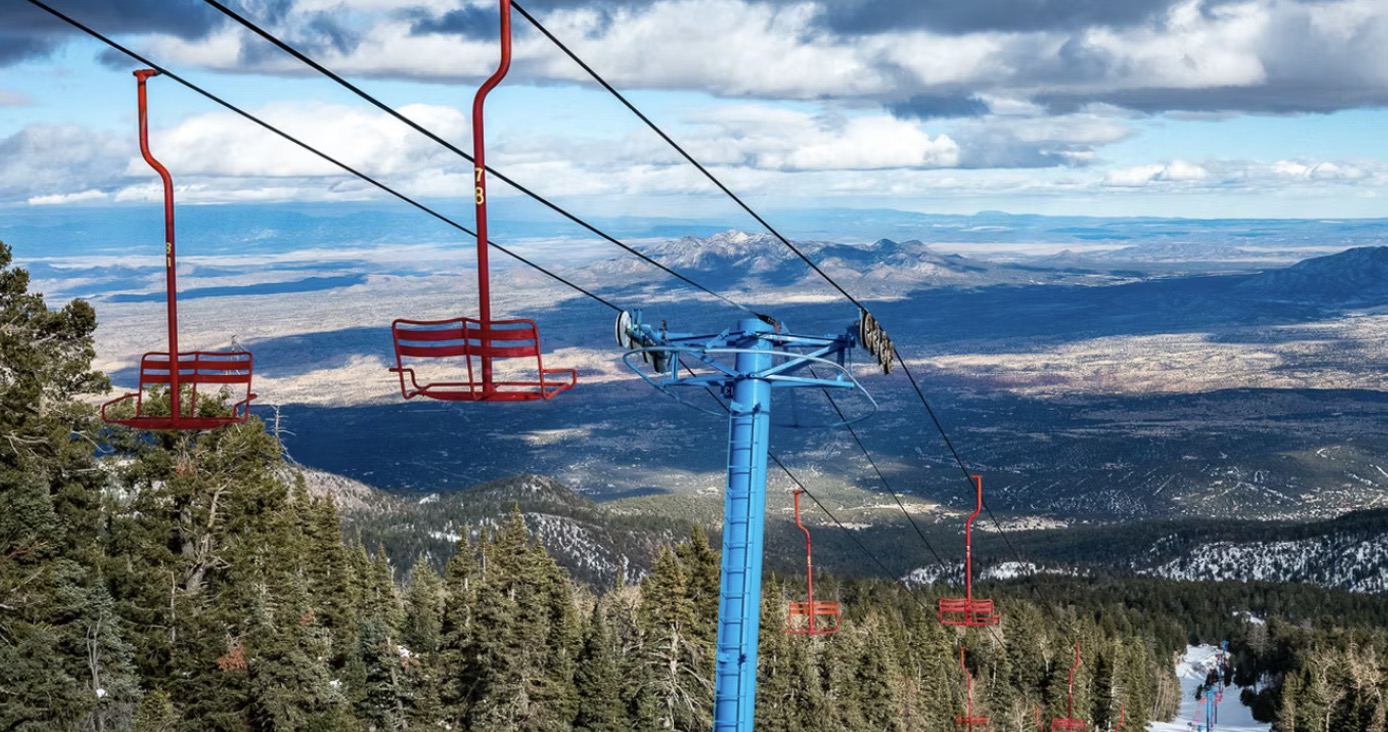

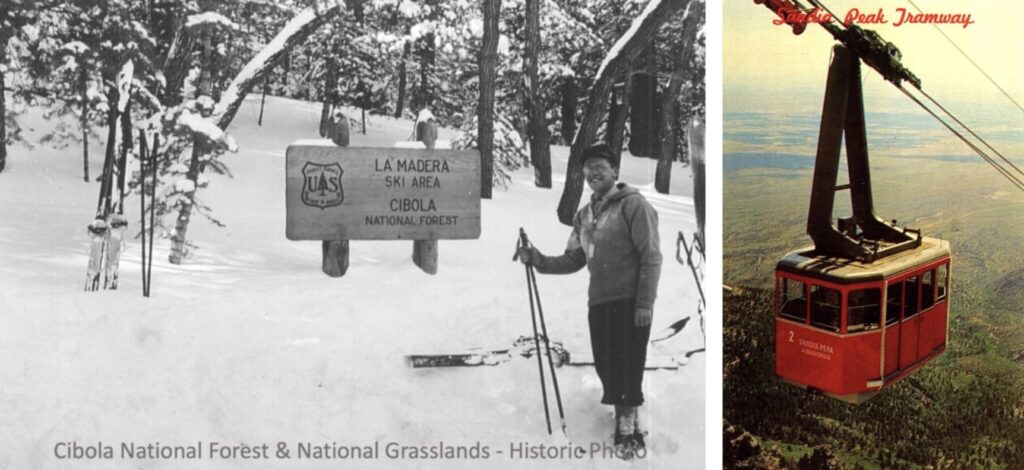
Sandia Peak Ski Area, situated in La Madera Canyon and New Mexico’s first ski resort, began in 1937 with a vision of Robert J. Nordhaus, was under the ownership of the Abruzzo family from the 1950s through the early 2020s, and is now operated by Mountain Capital Partners, “…dedicated to revitalizing the infrastructure and experience…” Click on the right image above to watch a feature story by KRQE about future plans for the ski area. Included in the video are photos of FOSM volunteers helping clear trails on the Forest Service property for the benefit of hikers and mountain bikers.
Sandia Peak Aerial Tramway

Owned and operated by the Abruzzo family, “The Tram” makes Sandia Crest easily accessible and one-way hikes of the iconic La Luz Trail possible, but be sure to check their website before starting your journey.
Adjoining the upper tram terminal is the Ten 3 restaurant where you can experience breathtaking views while dining at 10,300 feet above sea level.
Medallion Trees
For years the identity of the person or persons who took core samples, meticulously counted tree rings to determine the age of each tree, then attached medallions to at least 84 trees scattered throughout the Sandia Mountains remained a mystery. In most cases, the medallions show an identification number, the estimated germination year of the tree, and an historical event that happened on or about that year.
A 2020 Albuquerque Journal article described two friends’ quest to find all 84 of the trees. A similar Albuquerque Journal article ran in 2025. These and other newsarticles enhanced the mystery. Two hundred people joined a Facebook group.
The mystery was solved in 2025 when John Holmes announced to the Facebook group that his father David, who had died at age 92, was the man behind the medallions. John and Sandia hiking expert Mike Coltrin entertained the FOSM membership with fascinating stories about David Holmes, the medallion trees, and David’s blazing of Faulty and North Faulty Trails.
Slides from the presentation can be viewed here. Also available is David Holmes’s comprehensive history of events related to the Sandias. A video of the presentation can be accessed by clicking on the image below.
Sadly, several medallions are missing from their trees, which seems to indicate the work of selfish souvenir hunters. Please leave the medallions as you find them for others to enjoy.
One of the missing medallions, Robert II Crowned King of Scotland Tree, is on display at the Sandia Ranger Station having been removed by the Forest Service from a fallen tree alongside South Crest Trail.
FOSM member Jamey Browning, who has found and photographed all 84 medallions or the trees on which they once were mounted, created a comprehensive collage showing the medallions along with photos of the trees on which they were (or should have been) found.
Jamey also has been replacing missing medallions with near-perfect replicas even some of which have been stolen.
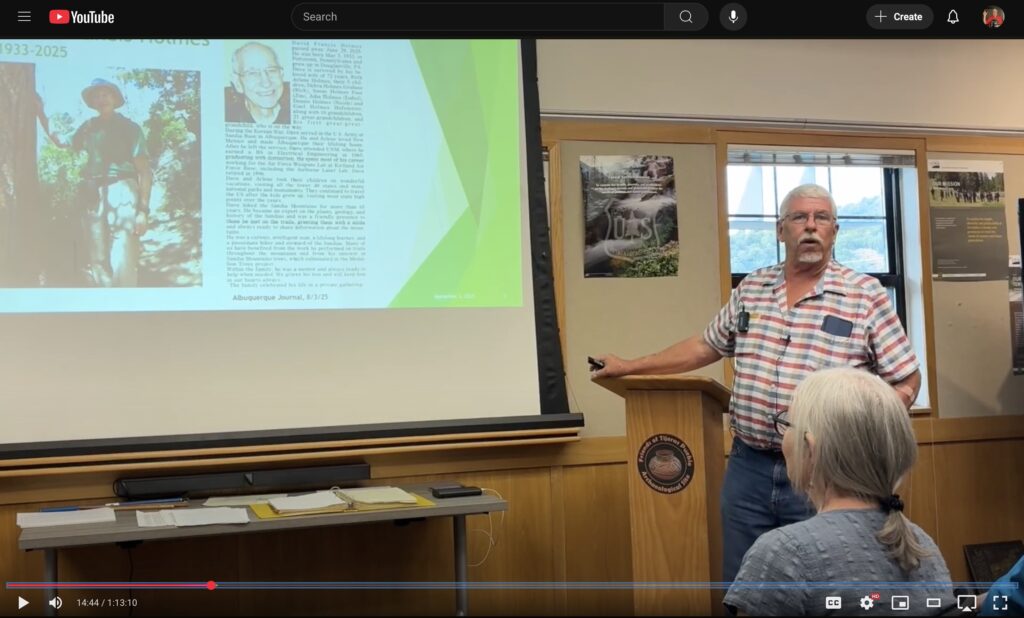
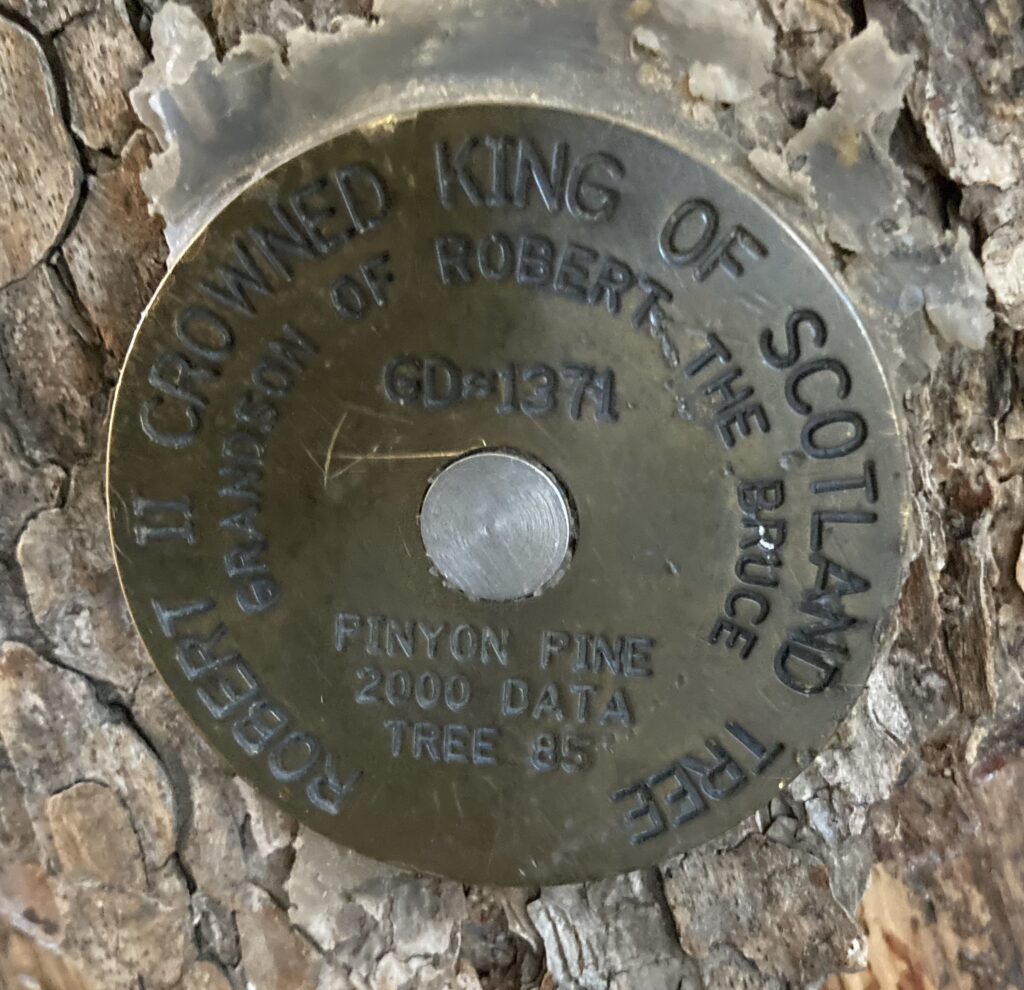
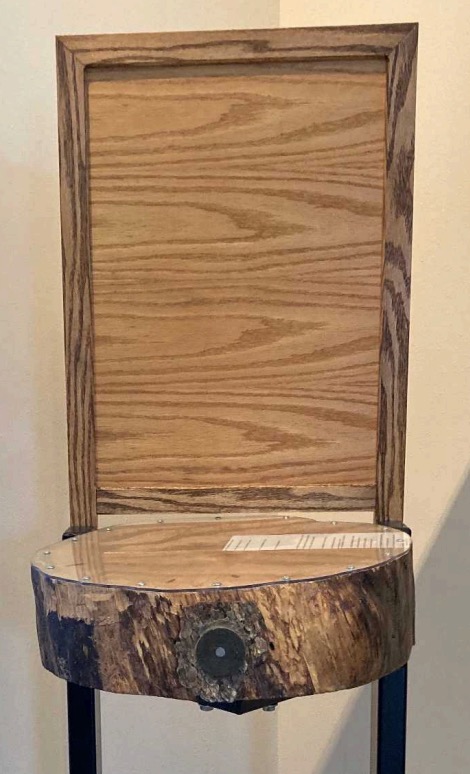
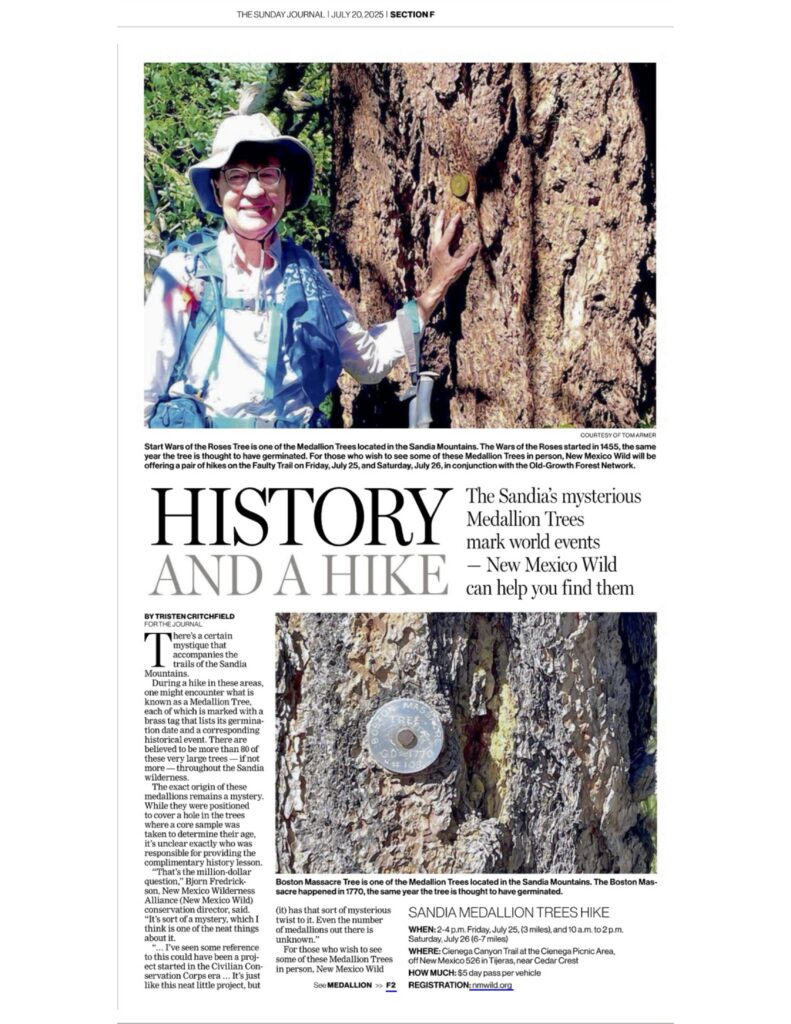
After his presentation to FOSM, John obtained a link to a video interview with his father done by Melissa Howard of the East Mountain Historical Society in 2013 as a part of their Sandia Mountain Legacy Project. During the interview David shared the history behind the medallion trees.

Aircraft Crash Sites
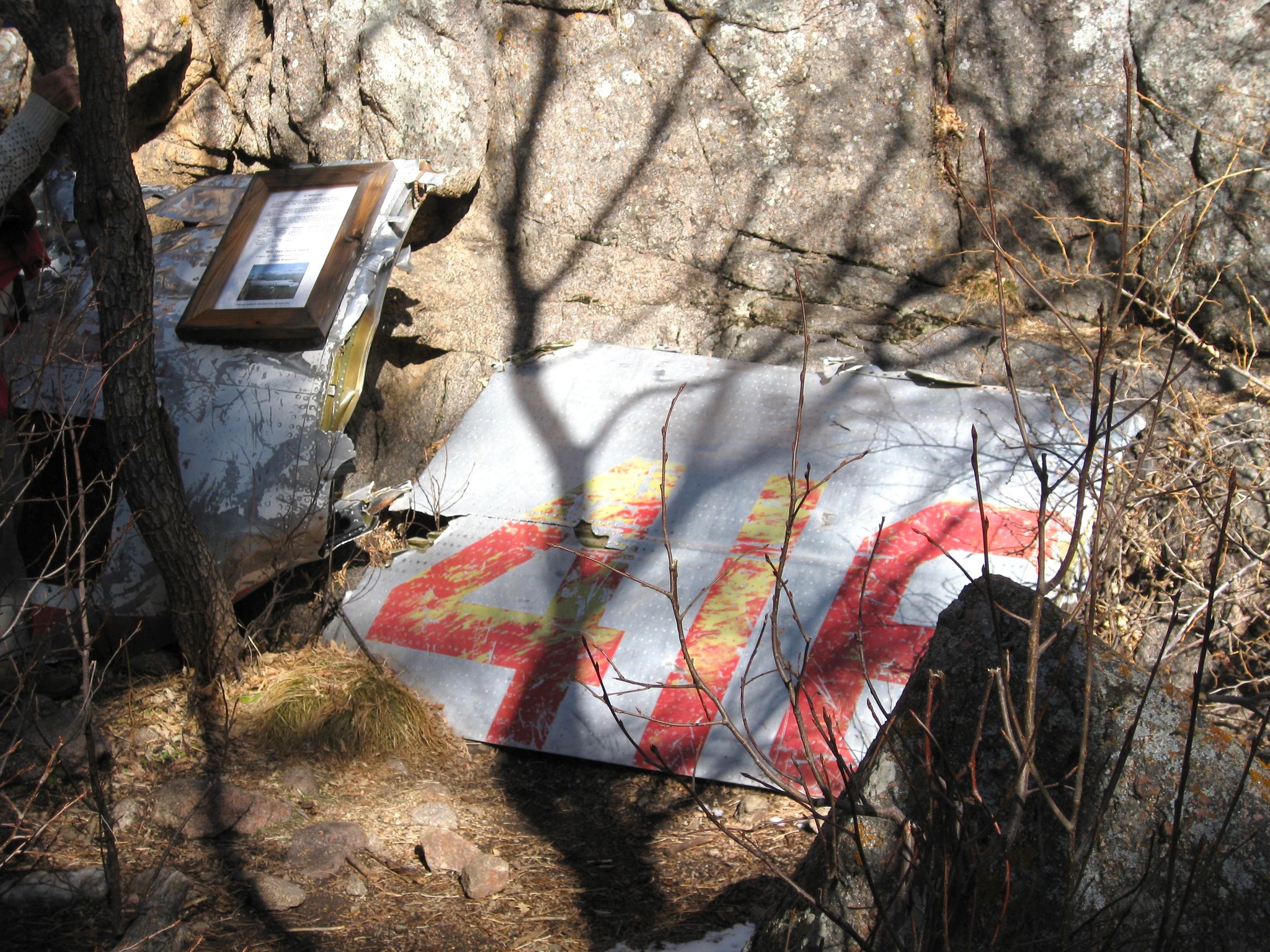
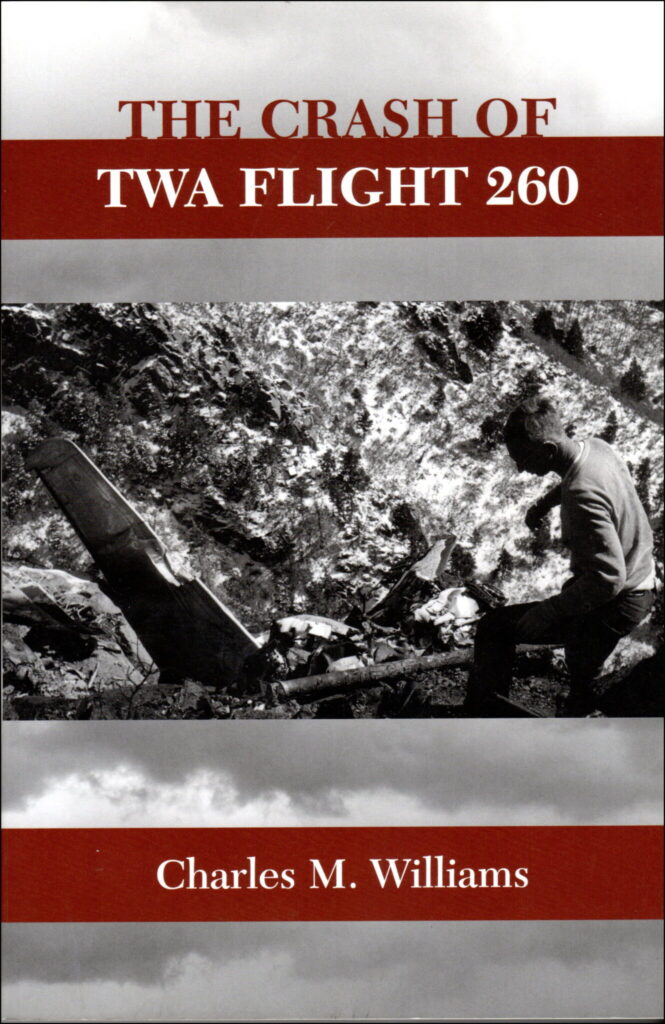
Unfortunately, the proximity of the Sandias to a major civilian and military airfield has made them the location of more than a dozen aircraft crashes over the years with the most famous and deadly being the crash of TWA flight 260 in 1955.
FOSM co-founder Sam Beard, who has visited most of the sites (and was the first person to arrive at one of them), presented a summary of the crashes at a FOSM membership meeting in 2021 augmented by a compilation of newspaper articles, NTSB reports, and other information. We learned in 2025 that Sam used David Holmes’s history as one of his sources of information.
- Sam Beard presentation
- Supplemental materials (Note active hyperlinks)
- An Amateur’s Reconstruction of TWA Flight 260 Accident
- You can find the detailed crash-site information here should the hyperlinks embedded in the above documents fail.
Other Bits of Sandia Mountains History
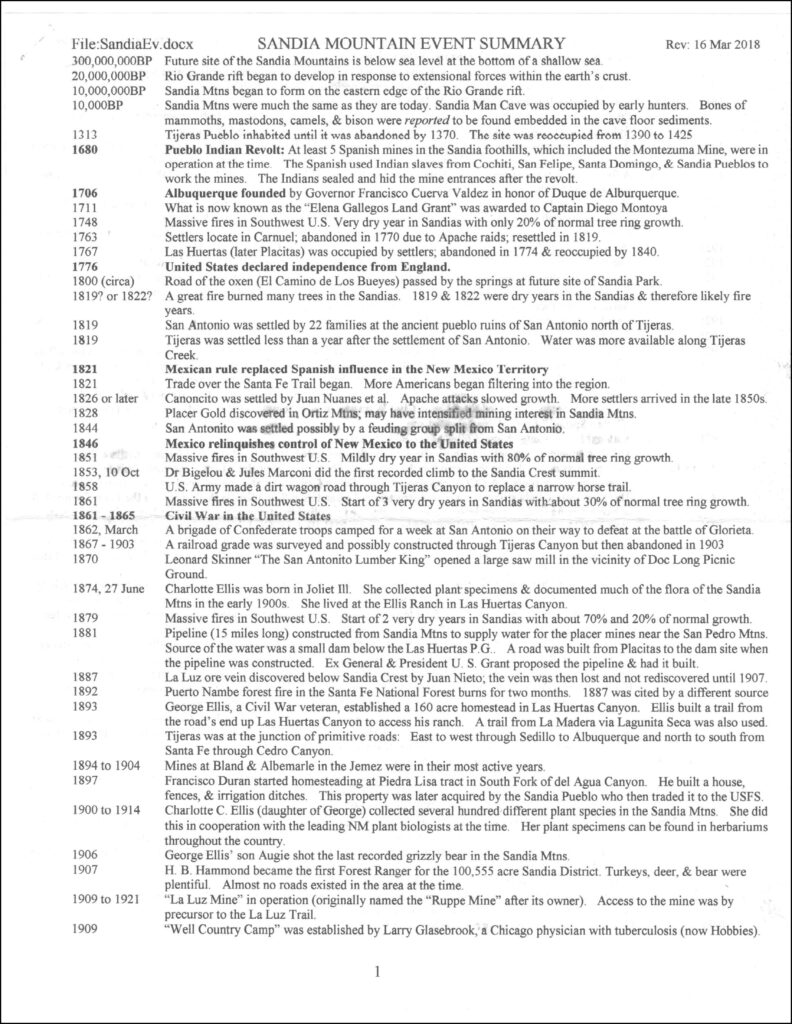
David Holmes compiled a several-page listing of important events beginning 300 million years ago when the limestone at Sandia Crest was “…at the bottom of a shallow sea.”
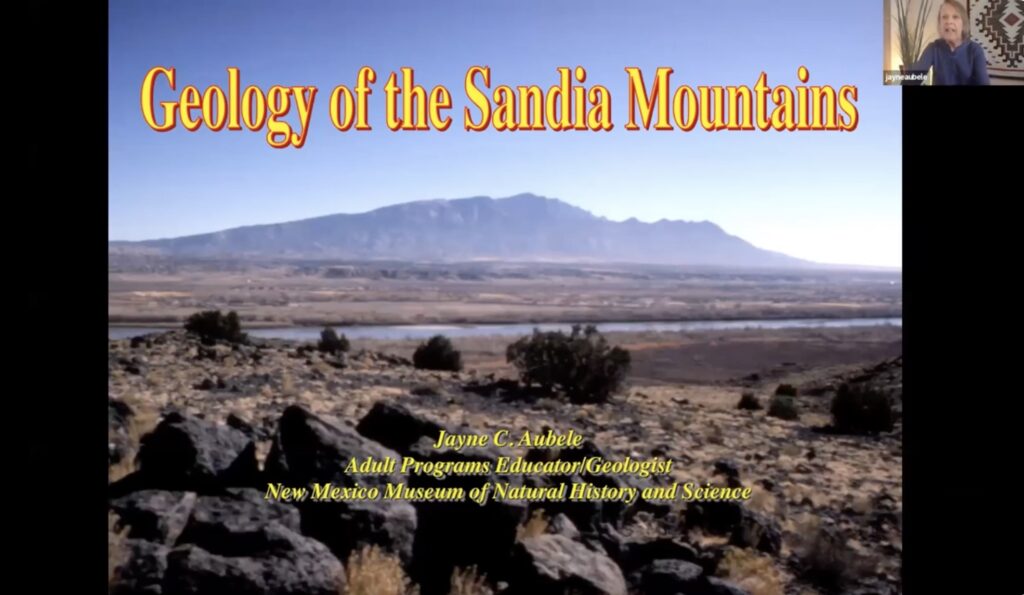
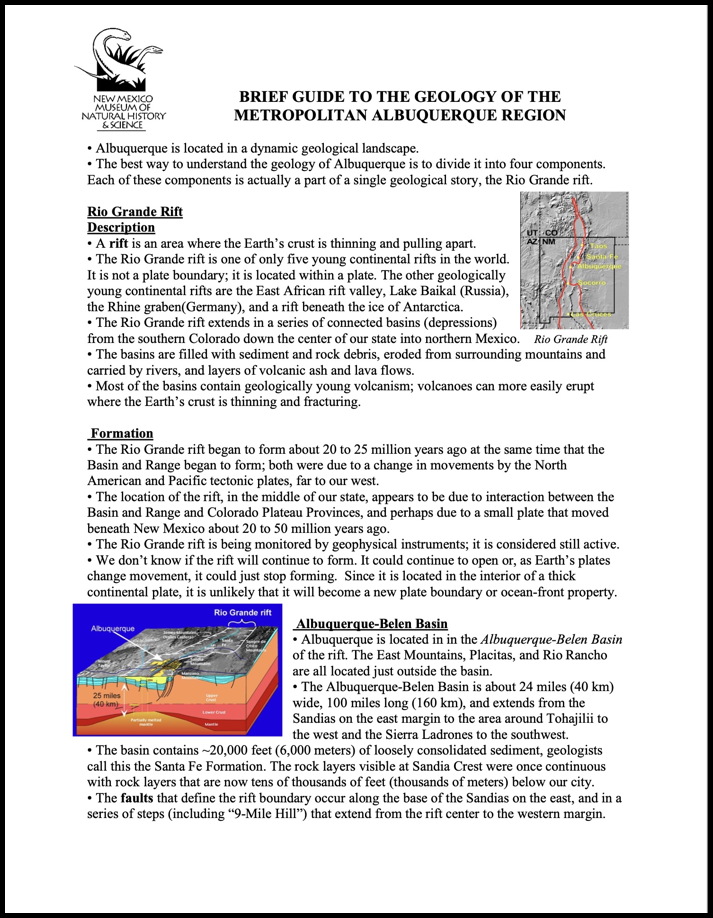
Geologist Jayne Aubele provided a handout with lots of facts and figures about the Sandias and surrounding areas in conjunction with the June 2022 FOSM membership meeting.
Web surfing by FOSM members Jamey Browning and Cliff Giles yielded other interesting reading and viewing regarding the history of our mountains:
- Ellis Ranch – Stuart Balcomb’s personal memories of the homestead established in Las Huertas Canyon in 1887 by the eponymous Kansas family.
- Sandia Conference Grounds – an historic site dating from 1928 as a “place in the mountains” where meetings of the Presbyterian Synod of New Mexico took place. (The site apparently is no longer operational. Although still listed on the Presbytery of Santa Fe website, the webpage link is nonfunctional.)
- Mining in the Sandias – According to Kelley and Northrup: The earliest record of mining in the Sandia Mountains area was in 1667… Documents now in the archives of Mexico and old Spanish documents in possession of the Gurule family of Placitas, bearing the date 1667 A.D., refer to five lost mines in this region of which the Montezuma Mine is one. This document mentions “Ia mina de Bentana, la mina de Ia Escalera,” and states: “al sur de Placitas la mina Nepumeseno y en el miseno Canon la mina de Coloa,” (“the Window Mine, the Ladder Mine, and to the south of Placitas is the Nepumeseno Mine and the Coloa Mine”)…The best known old mine in the Sandia Mountains is probably the La Luz, perhaps the highest mine in New Mexico. The altitude of the tunnel is 10,040 ft. According to “The Diggings, The mined ore at La Luz consists predominantly of gold and galena, while the waste material comprises mostly of limonite, calcite, and quartz. The total subsurface length is 83.82 meters … with …workings reported in 1975 to consist of a 100 feet adit, a 25 feet long open cut, a shallow winze, and a raise. Until a few years ago, hikers could walk into the adit and stare down the ominous dark vertical shaft; however, the Forest Service closed off the entrance to prevent a tragedy. The Sandia Mountains Natural History Center (SMNHC) recorded a video of explorations of various abandoned mining sites in the Sandias. Hiker and YouTuber Dario C. has published similar videos: 2/11/23, 2/16/23, 5/13/23, and 1/14/24.
- Loop road – J. B. Crawford’s “Ascent to Sandia Crest” (Part 1, Part 2) describing the long-dreamed-of highway network that eventually became the highway leading to the top of the mountain. Included is an excellent explanation of what happened to the abandoned North Crest loop road resulting in what we now call Ellis Trail.
- Sandia (Man) Cave – A trove of information about the internationally known cave in Las Huertas Canyon (Swifty Travels , SMNHC), UNM professor Frank Hibben, and one of the biggest controversies to shake the field of American archeology (New Yorker, gideonstuff, Donny Dust). (You can see a Sandia Point being made while watching the last video.) While the word “Man” has been dropped from the official name, archeology students no longer learn about “Sandia Man,” and doubts about his scientific methods and provenance of his artifacts still remain, recent findings at White Sands at least vindicate Hibben’s assertion that humans were in New Mexico over 20,000 years ago.
- La Luz Trail Run – A popular event held annually from 1965 to 2019. This ultimately nine-mile (originally 6-mile) race started in the foothills of the Sandia Mountains in Albuquerque and finished at Sandia Crest at an elevation of 10,678 feet—over 4,000’ of elevation climb. The COVID pandemic caused cancellation of the 2020 race. No subsequent races have occurred because in May 2021 the Forest Service determined the event to be out of compliance with provisions of the 1978 Sandia Mountains Wilderness Act and not grandfathered in as had been assumed. The Albuquerque Road Runners Club webpage linked to above provides details about the cancellation and subsequent efforts to pass legislation to enable the races to resume. The website also links to Tom Kirchgessner’s fascinating history of the race including the fact that Al Waquie of Jemez Pueblo won the 1978 race, with the course about 7.9 miles long after rerouting of La Luz Trail with long switchbacks, in a truly amazing time of 57 minutes forty seconds—the fastest the course was ever run. The event became so popular that the starting point was moved down the mountain over a mile from the La Luz Trailhead to allow runners to spread out on the trail.
- Sandia Snowshoe Classic – Another popular annual event (weather and snow conditions permitting). FOSM has organized the event since 2001. Generous sponsors provide refreshments and “swag” for the participants. Parking and trail capacity considerations limit registration to 175 participants.
Jamey also collected materials describing the history of the Sandia Peak Ski Area and Sandia Peak Aerial Tramway.
Last updated 3 hours ago